ITH Coaster Appliqué Set 3 Designs Review
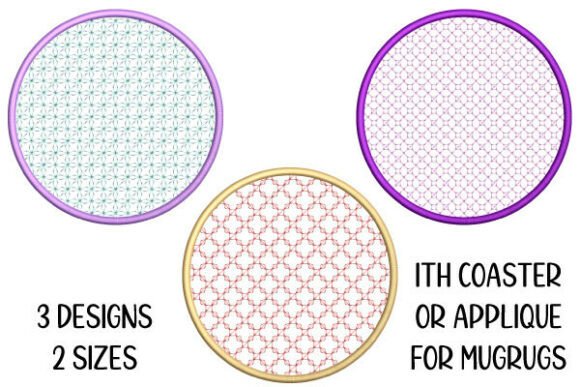
As an embroidery designer preparing for a busy weekend craft fair, I am constantly evaluating which digital assets will translate best into physical sales. When reviewing the ITH Coaster Appliqué Set 3 Designs, my primary focus is versatility and production efficiency. This versatile embroidery set includes 3 designs in 2 sizes each, making it a strategic asset for sellers who need to maximize booth inventory without excessive setup time. In the Food Dining category, coasters are often overlooked as low-ticket items, but when executed as high-quality appliqué motifs, they become premium add-ons that elevate the perceived value of your entire handmade product line.
First Impressions and Booth Appeal
The immediate strength of this machine embroidery design lies in its dual-purpose nature. While marketed as an ITH (In-The-Hoop) coaster, the description highlights its utility as decorative appliqué motifs. For a craft fair table laden with tote bags, aprons, and tea towels, this distinction is critical. A standalone coaster can sometimes get lost in visual clutter, but when these designs are applied as accents on larger functional items, they create a cohesive brand story. The aesthetic leans toward a clean, boutique style that bridges rustic charm and modern utility. It does not feel overly cutesy or dated; instead, it possesses a timeless quality that appeals to customers looking for durable, giftable kitchenware rather than novelty trinkets.
From a distance, the bold shapes inherent in appliqué work capture attention better than intricate redwork or dense fill stitches. At a market stall where customers are walking by quickly, the ITH Coaster Appliqué Set 3 Designs offers readable silhouettes that communicate "handmade quality" instantly. The inclusion of two sizes allows me to test visual hierarchy; the larger size serves as a focal point on market bags, while the smaller size works beautifully as a subtle branding element on napkins or pocket accents.
Application Across Product Categories
Evaluating where this embroidery file performs best requires understanding fabric interaction. For tote bag design and canvas market bags, the appliqué technique adds texture that printed vinyl cannot replicate. Customers love touching embroidered goods, and the dimensional quality of appliqué invites tactile engagement. On aprons, specifically denim or heavy cotton twill, these designs provide a professional finish that suggests commercial-grade durability. However, for tea towel embroidery, caution is necessary. Flour sack towels are popular for their absorbency, but their loose weave can cause registration issues with complex ITH steps. I recommend using a slightly heavier linen blend or ensuring a robust stabilizer strategy when applying these motifs to toweling.
Beyond traditional linens, consider the embroidered patch potential. Because these are designed as ITH projects, they already have finished edges. You could stitch them out on felt or heavy interfacing, cut them free, and sell them as iron-on patches for DIY enthusiasts. This expands your customer base to include Cricut users and hand-sewers who may not own embroidery machines. For Etsy sellers, this flexibility is gold. You can list the finished coaster, the embellished apron, and the raw patch as three separate SKUs derived from one digital embroidery file.
Production Efficiency for Small Shops
For creative entrepreneurs, time is money. The ITH Coaster Appliqué Set 3 Designs scores high on repeatability. In-the-hoop construction minimizes hooping errors because the placement lines guide the entire process within a single hoop session. This is vital for batch production before a show. I can load the hoop once and produce multiple units with consistent alignment, reducing waste and labor time. The fact that there are three distinct designs means I can offer variety without changing threads or re-digitizing, keeping the production flow smooth.
Photographing these for online listings is equally straightforward. Appliqué tends to photograph well because the fabric contrast creates natural shadows and depth. Unlike satin stitch designs that can glare under studio lights, the matte texture of appliqué fabric reads clearly in camera sensors. When creating a printable mockup or listing photo, ensure you capture the texture close-up. Buyers need to see the stitch quality and fabric choice to justify the price point of a handmade product.
Critical Technical Considerations
Despite the user-friendly nature of ITH files, professional results require technical diligence. Always verify the specific hoop size requirements before purchasing or stitching. Since the description mentions two sizes, confirm that your machine’s hoop dimensions accommodate the larger variation with adequate clearance. Stitch density is another factor; appliqué should be secure but not bulletproof. If the design feels too stiff on a sample run, consider adjusting the tack-down stitch length or using a lighter weight fusible web.
Fabric texture plays a massive role in the final outcome. While these designs likely perform excellently on quilting cotton, testing on textured surfaces like waffle weave or terry cloth is mandatory. Deep textures can swallow small details or cause the appliqué fabric to shift during the satin border phase. Use a water-soluble topping on any pile fabric to keep stitches visible and crisp. Additionally, check thread colors against your chosen appliqué fabrics. High contrast between the stitching and the appliqué material defines the shape, whereas low contrast creates a more subtle, tone-on-tone elegance. Both are valid, but they target different demographics.
Designer Notes for Commercial Success
Before listing any item created with this set, review the licensing terms included with the digital embroidery file. Ensure you have the right to sell finished products commercially, especially if you plan to scale beyond local fairs. Create at least one real-world mockup before committing to a full production run. Photograph it in natural light to assess true color accuracy. Compare fabric colors side-by-side; what looks good on screen might clash in person.
- Test on Scrap: Never run a new design on final product fabric first. Verify tension and registration on similar weight scraps.
- Stabilizer Selection: Match stabilizer to the end-use. Wash-away is great for coasters, but cut-away provides better long-term support for aprons and bags.
- Commercial Licensing: Confirm permissions for selling physical items versus digital redistribution.
- Size Verification: Measure the actual stitch-out. Digital measurements can vary slightly depending on machine calibration.
- Thread Contrast: Ensure visibility. Test dark threads on dark fabric to prevent detail loss.
Ultimately, the ITH Coaster Appliqué Set 3 Designs represents a smart investment for the Food Dining niche. It balances aesthetic appeal with manufacturing practicality, allowing small shop owners to produce high-margin items efficiently. Whether used as a standalone coaster or a decorative accent on premium textiles, this set has the potential to drive sales through its professional finish and adaptable styling. By focusing on quality materials and precise execution, you transform a simple digital file into a tangible asset that strengthens your brand presence at every craft fair and online marketplace.