Boho Circle Pattern: A Merchandise Design Review
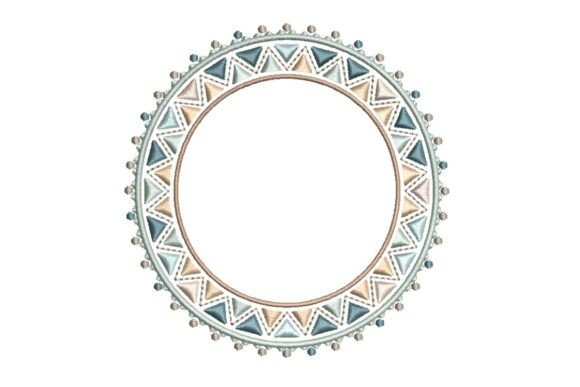
As an embroidery designer who regularly consults with small businesses on branding and merchandise, I approach every new machine embroidery design with a critical eye toward production viability. When reviewing the Boho Circle Pattern for potential commercial use, my primary focus is not just aesthetic appeal, but functional versatility. This design features a detailed ring of geometric triangles rendered in a soft, muted color palette, specifically structured to frame monograms or initial designs. For business owners, Etsy sellers, and apparel decorators, this specific configuration offers a unique intersection of artistic style and practical branding utility that warrants a closer technical evaluation.
Visual Personality and Brand Alignment
The first impression of the Boho Circle Pattern is distinctly modern yet approachable. Unlike rigid corporate logos or overly ornate vintage crests, this design strikes a balance that feels handmade and premium without sacrificing professionalism. The geometric triangles provide structure and symmetry, which communicates reliability and attention to detail—essential traits for building customer trust. Simultaneously, the "boho" descriptor and muted tones suggest creativity, warmth, and organic quality.
For a creative studio, florist, bakery, or pet brand, this visual language is highly effective. It avoids the sterile look of mass-produced corporate wear while maintaining enough polish to serve as legitimate brand identity collateral. The circular shape is inherently inclusive and balanced, making it an excellent container for business initials. When evaluating design assets for a boutique or café, this pattern reads as intentional and curated rather than generic clip art, elevating the perceived value of the finished product.
Commercial Applications for Small Business Merch
In real-world scenarios, the Boho Circle Pattern demonstrates significant flexibility across various small business merch categories. Its circular geometry makes it naturally suited for embroidered patch production. Patches are a low-risk entry point for businesses testing branded merchandise; they can be applied to denim jackets, backpacks, or beanies without committing to full garment decoration. Because the design includes a defined border, it digitizes cleanly into merrowed edge patches, ensuring the geometric triangles remain crisp even when removed from the original fabric context.
For hospitality and retail staff, this design works exceptionally well as apron embroidery. Aprons often feature large, flat areas perfect for framing a business name or employee role within the circle. The muted color palette described in the product details is advantageous here, as it tends to hide minor staining better than stark whites or neons, extending the lifespan of workwear. Similarly, for tote bag design, the boho aesthetic aligns perfectly with the eco-conscious, artisanal vibe that tote bags typically convey. A canvas tote featuring this framed initial creates a cohesive unboxing experience for customers receiving shipped goods or purchasing at markets.
Cap embroidery presents another strong use case, provided the sizing is adjusted correctly. The circular nature of the design complements the curved front panel of a hat better than square or rectangular logos. For event merch or limited-edition drops, the ability to simply swap out the center monogram while keeping the outer Boho Circle Pattern consistent allows businesses to create variations (e.g., "Est. 2024," location names, or department codes) without purchasing entirely new digital embroidery file sets.
Technical Considerations and Production Constraints
Despite its versatility, professional application requires careful attention to technical limitations. The description notes a "detailed ring," which serves as a caution flag for miniaturization. Geometric triangles rely on sharp angles and clean satin stitches. If scaled down too aggressively for tiny sleeve cuffs or baby onesies, these details may become muddy or cause excessive stitch density. High density leads to stiff fabric, needle breaks, and registration issues where the outline fails to meet the fill.
When planning custom apparel for textured fabrics like fleece, terry cloth, or heavy canvas, the fine details of the triangle ring risk getting lost in the nap. In these instances, I recommend using a water-soluble topping to keep the stitches visible and defined. Conversely, on performance wear or thin knits, the density of the geometric border could cause puckering. Proper stabilizer selection is non-negotiable; a cut-away stabilizer is generally safer for permanent wearables to support the weight of the detailed ring over time.
Color contrast is another critical factor. While the "soft, muted color palette" is aesthetically pleasing, it must be tested against the base garment color. Muted sage on a heather grey shirt may lack the definition needed for quick visual recognition at a distance. For commercial embroidery intended for uniforms or signage, ensure there is sufficient tonal contrast between the thread colors and the fabric texture. Always verify the specific hoop size requirements of the embroidery file before purchasing to ensure compatibility with your machine’s capabilities, especially if you intend to run bulk orders efficiently.
Strategic Value and Buyer Engagement
Beyond the physical stitch-out, the Boho Circle Pattern influences how customers perceive a brand. In the saturated market of handmade products and Etsy shops, visual consistency builds recognition. Using this specific frame across multiple touchpoints—from social media avatars to packaging stickers to actual embroidered goods—creates a unified brand ecosystem. Customers begin to associate that specific geometric ring with your business's quality standard.
Furthermore, the "frame your creativity" aspect invites personalization. For businesses offering custom services, this design acts as a template. A wedding planner could offer personalized handkerchiefs; a dog groomer could offer tagged bandanas. This adaptability increases buyer engagement because the product feels bespoke rather than off-the-shelf. However, always confirm commercial licensing terms before integrating any digital embroidery file into products intended for resale to protect your business legally.
Designer Notes for Successful Implementation
To maximize the return on investment for this design, follow these practical steps before full production:
- Test in Monochrome First: Before running the full multi-color version, stitch out the design in black and white. This reveals the true structural integrity of the geometric triangles without color masking poor digitizing or tension issues.
- Create Printable Mockups: Use software to overlay the design onto photos of your actual inventory. A printable mockup helps visualize scale and placement on caps versus aprons, preventing costly positioning errors.
- Evaluate Wash Fastness: If using this for staff uniforms or children’s items that require frequent laundering, test wash a sample. Muted threads can sometimes fade differently than vibrant ones, and dense geometric borders may shrink at different rates than the base fabric.
- Check Spacing for Monograms: Measure the inner negative space precisely. Ensure your chosen font for the business initial fits comfortably without touching the triangle ring. Crowded text reduces legibility and looks unprofessional.
- Compare Beside Existing Assets: Print the design at actual size and place it next to your current business cards, tags, and website header. Does the Boho Circle Pattern harmonize with your existing typography and color scheme? Visual discord confuses customers.
- Verify File Compatibility: Confirm the file format matches your machine. While most formats are universal, some complex geometric fills translate differently between software brands. Always run a test stitch on the exact fabric texture you plan to use for the final order.
The Boho Circle Pattern represents a sophisticated option for businesses seeking to blend artistic flair with functional branding. By respecting its technical boundaries and leveraging its adaptable framing structure, small business owners can transform this machine embroidery design into a powerful asset for uniforms, patches, and merchandise that resonates with their target audience. Success lies not just in the design itself, but in the thoughtful, professional execution of its application.