Read Me a Story: Embroidery Design Review
As an embroidery designer specializing in commercial branding and merchandise production, I approach every new machine embroidery design with a critical eye toward production viability. When evaluating "Read Me a Story" for small business applications, my focus shifts immediately from its nursery category origins to its potential as a versatile asset for creative commerce. While the product description highlights its suitability for t-shirts and tote bags, experienced digitizers know that a design’s true value lies in its adaptability across different substrates and business contexts. This review examines how this specific embroidery file performs when tasked with building brand identity rather than just decorating children's wear.
Visual Personality and Professional Adaptation
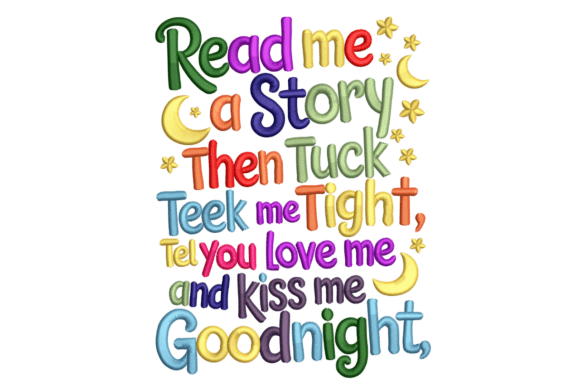
The first impression of "Read Me a Story" suggests a narrative-driven aesthetic that balances whimsy with legibility. For a business owner, this visual tone is crucial. It does not scream "industrial corporate," nor does it feel overly juvenile despite the nursery classification. Instead, it occupies a sweet spot of artisanal warmth. This makes it exceptionally relevant for businesses where storytelling is part of the service model. Independent bookstores, literacy-focused tutoring centers, boutique bakeries with a nostalgic theme, or handmade stationery brands can leverage this design to communicate a sense of curated care.
In terms of professional presentation, the design appears optimized for clarity. The phrase "full of personality" in the product description often implies distinct lettering styles or illustrative elements that retain their character even when scaled. For custom apparel, this means the design avoids the muddy look that plagues poorly digitized script fonts. A clean stitch-out ensures that whether the design is used on a staff uniform or a customer gift, it reinforces a perception of quality and attention to detail.
Strategic Applications for Small Business Merch
When integrating "Read Me a Story" into a commercial lineup, versatility is key. Here is how this design translates across various small business merch categories:
- Tote Bag Design: This is the primary use case suggested by the manufacturer, and for good reason. Totes offer a flat, stable canvas that accommodates the design’s full scale without distortion. For a florist or market vendor, this design transforms a functional bag into a walking billboard that feels organic rather than promotional.
- Apron Embroidery: For cafés and creative studios, aprons are high-visibility real estate. Placing this design on the chest pocket area creates an immediate connection with customers. The narrative theme aligns perfectly with businesses that guide clients through an experience, such as coffee tasting or art workshops.
- Embroidered Patch Production: With proper backing, this design can be converted into a standalone patch. This is ideal for businesses wanting flexible branding assets that can be applied to caps, jackets, or packaging. However, verify the border definition before mass-producing patches to ensure clean edges.
- Staff Uniforms and Caps: While cap embroidery presents challenges due to curvature, this design’s likely moderate density makes it a candidate for structured caps if resized appropriately. On polo shirts or work tees, it serves as a softer alternative to rigid corporate logos, fostering a friendly team culture.
Technical Considerations and Production Limitations
Despite its versatility, "Read Me a Story" requires technical diligence. As with any digital embroidery file, assuming universal compatibility leads to production failures. Business owners and decorators must evaluate specific constraints before running bulk orders.
Fabric Texture and Stabilizer Selection
The product description notes the design is "easy to stitch," but ease is relative to substrate choice. On smooth cottons like quilting fabric or poplin, the design will perform as intended. However, on textured fabrics like linen aprons or canvas totes, stitch density becomes a critical factor. If the design relies on fine details, heavy texture may cause registration issues. Always pair this design with appropriate stabilizer; a cutaway backing is recommended for stretchy knits to prevent puckering, while tear-away may suffice for stable woven goods.
Sizing and Legibility Thresholds
One common pitfall in commercial embroidery is aggressive resizing. Reducing "Read Me a Story" to fit a tiny sleeve cuff or hat front risks collapsing internal spaces in the lettering. Before committing to small-scale applications, test the minimum viable size. If the text becomes unreadable below three inches, restrict the design to larger formats like tote bags or back-of-jacket placements. Never sacrifice legibility for placement; a blurry logo damages brand identity more than no logo at all.
Thread Colors and Contrast
Nursery designs often utilize pastel palettes. For business use, you may need to re-thread the design to match your brand guidelines. High contrast is essential for visibility on merchandise. Test thread colors against your actual garment stock, not just digital screens. Dark uniforms require light thread or a white underlay base to make the design pop. Verify that the original digitizing includes adequate underlay for color changes, especially if switching from light to dark threads.
Impact on Brand Value and Customer Engagement
Using a design like "Read Me a Story" signals a specific type of business ethos. It moves away from sterile professionalism toward authentic engagement. In the handmade and Etsy seller space, buyers are purchasing a story as much as a product. This design acts as a visual shorthand for that narrative.
For a handmade product line, consistent use of this embroidery across tags, packaging, and apparel creates a cohesive unboxing experience. It elevates the perceived value of the item because embroidery implies permanence and effort compared to screen printing or heat transfer. Furthermore, when customers see staff wearing branded gear featuring this design, it humanizes the business. It suggests that the people behind the counter share the same appreciation for craft and story that the customer does, deepening trust and loyalty.
Essential Pre-Production Checklist for Decorators
Before adding "Read Me a Story" to your production queue, complete this verification process to protect your investment and reputation:
- Verify Commercial Licensing: The product description mentions upgrading crafting projects, but it does not explicitly state commercial licensing terms for resale or business branding. Always confirm you have the right to use this design assets for profit-generating activities before stitching a single unit for sale.
- Check Hoop Size Compatibility: Ensure the design dimensions fit within your machine’s maximum embroidery area. If you plan to combine this with other branding elements, calculate the total footprint to avoid needing multiple hoopings.
- Create a Printable Mockup: Before physical sampling, use software to generate a printable mockup. Place it on photos of your actual merchandise to visualize scale and placement. Share this with stakeholders for approval to avoid costly re-dos.
- Run a Black and White Test: Stitch the design in a single color first. This reveals the underlying structure and density without the distraction of multiple thread changes. Inspect for gaps, pulls, or excessive jump stitches.
- Test on Real Fabric: Never rely solely on test felt. Stitch on the exact material you intend to sell. Wash and dry the sample to check for shrinkage or distortion, ensuring the finished product maintains integrity after customer use.
- Audit Spacing and Kerning: At smaller sizes, letter spacing often closes up. Manually inspect the spacing in your embroidery software. You may need to increase kerning slightly if scaling down for apron embroidery or chest logos.
"Read Me a Story" offers significant potential for businesses seeking to infuse their merchandise with warmth and narrative appeal. By treating it as a professional asset subject to rigorous testing and strategic application, small business owners can transform this nursery-inspired design into a powerful tool for brand recognition and customer connection. Success in commercial embroidery comes not just from the design itself, but from the intentionality behind its execution.