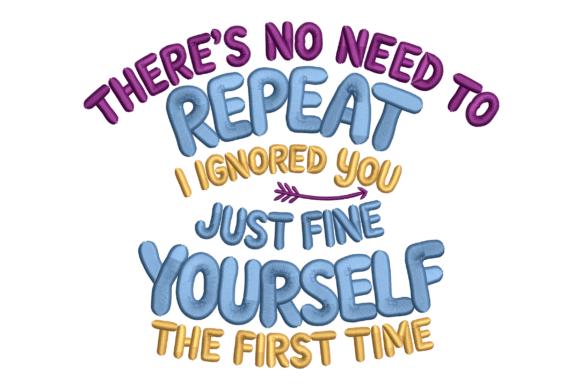
No Need to Repeat: Boutique Apparel Embroidery Review
As an embroidery designer constantly curating collections for boutique apparel, I approach every new machine embroidery design with a critical eye. When sourcing files from platforms like Creative Fabrica, the goal is always to find artwork that translates seamlessly from a digital screen to a tangible, high-value garment. Recently, I evaluated "No Need to Repeat," a design categorized under Friends Quotes, specifically to determine its viability for a upcoming line of sweatshirts and casual wear. This review breaks down my professional assessment of how this design performs in a real-world production environment for small clothing brands and Etsy sellers.
First Impressions: Visual Personality and Stitch Mood
The phrase "No Need to Repeat" carries an inherent confidence that appeals to modern consumers looking for minimalist yet expressive custom apparel. Upon opening the embroidery file, my immediate focus was on the visual personality. For boutique merchandise, text-based designs must strike a delicate balance; they need enough decorative strength to stand alone without requiring excessive embellishment. This design feels decidedly casual and trendy, avoiding the stiffness that sometimes plagues quote-based embroidery.
The mood reads as playful but polished, making it suitable for both feminine and unisex collections. It does not feel overly rustic or aggressively bold, which actually increases its versatility. Instead, it possesses a clean aesthetic that suggests it will sit beautifully on neutral sweatshirts and pastel hoodies. For a boutique brand, this level of visual restraint is often more valuable than complex artwork because it allows the quality of the stitching and the garment itself to take center stage. The design promises to be easy to stitch, which is a crucial factor when planning bulk production runs where machine time equals profit margin.
Application Strategy for Sweatshirts and Hoodies
When integrating "No Need to Repeat" into a collection, placement is everything. Based on the design's description as perfect for t-shirts and tote bags, I envision three primary applications for heavier garments:
- Left Chest Placement: This is the most commercially viable option for sweatshirt embroidery. The design’s personality fits perfectly in the 3x3 to 4x4 inch range, creating a subtle statement piece that photographs well for social media graphics and lifestyle product photos.
- Sleeve Accents: For oversized garments, utilizing the wrist or forearm area adds perceived value. If the digitizing allows for resizing without distortion, this placement transforms a basic hoodie into a premium handmade product.
- Tote Bag Merchandise: As noted in the product details, this design works on decorative fabric pieces. Pairing a matching sweatshirt and tote bag creates a cohesive bundle for Etsy listings, increasing average order value through coordinated branding.
For dark apparel, thread color contrast becomes the defining factor. A cream or gold thread on a charcoal sweatshirt elevates the design from casual to chic. Conversely, using tonal threads on pastel hoodies creates a sophisticated, textured look that appeals to buyers seeking understated luxury. Always verify your thread colors against the specific garment dye lot before committing to a full production run.
Technical Considerations for Stretchy Fabrics
While "No Need to Repeat" is marketed as easy to stitch, working with fleece, ribbed cuffs, and jersey knits requires diligence. As experienced embroiderers know, a design that runs perfectly on quilting cotton can distort disastrously on a stretchy sweatshirt. Before listing any finished product, you must confirm the stitch density and underlay structure within the file.
If the design contains dense satin stitches or heavy fill areas, there is a risk of fabric puckering on lightweight tees or stretching out on heavy fleece. I strongly recommend testing on scrap fabric that matches your production garment weight. Pay close attention to how the design handles curves; if the lettering has tight corners, ensure your machine tension is calibrated to prevent thread breaks or bird nesting. Additionally, check the required hoop size before purchasing. Nothing halts production faster than realizing a design requires a hoop larger than what your multi-needle or single-needle machine currently supports.
Stabilizer choice is non-negotiable here. For hoodie design projects, a medium-weight cutaway stabilizer is typically superior to tear-away options to prevent distortion over time. If placing the design near a seam or pocket, consider using a topping to keep the pile of the fleece from pushing through the stitches. These technical adjustments are what separate professional commercial embroidery from amateur crafting.
Elevating Brand Identity and Buyer Trust
In the saturated market of digital sellers and creative entrepreneurs, consistency builds trust. Using "No Need to Repeat" across multiple SKUs helps establish visual recognition for your shop. When customers see a cohesive aesthetic in your printable mockups and actual product photography, it signals professionalism. This design’s clean nature makes it excellent for branding because it doesn't compete with your logo or other shop elements.
However, value perception relies heavily on execution. A poorly hoisted sweatshirt with misaligned text devalues the entire brand. By treating this digital embroidery file with the same respect as a complex illustration, you signal to buyers that your small shop product is worth the price point. The phrase itself resonates with a demographic that values authenticity, so ensuring the physical embroidery matches that sentiment is vital for customer engagement and repeat business.
Designer Notes for Safe Production
Before adding items featuring "No Need to Repeat" to your storefront, adhere to this pre-production checklist to protect your reputation and equipment:
- Verify Licensing: Always review the specific Creative Fabrica license terms for this product. Confirm whether commercial use for finished apparel is included and if there are limits on the number of units sold.
- Test Stitch Out: Never skip the test sew. Use the exact fabric, stabilizer, and needle type intended for the final product. Inspect the back of the sample for bobbin tension issues.
- Check File Compatibility: Ensure the provided formats work with your specific machine software. Some conversion processes can alter stitch paths, so inspect the design in your editing software after downloading.
- Assess Resizability: Determine the safe scaling limits. Generally, satin stitches should not be enlarged more than 10-15% without re-digitizing to maintain structural integrity.
- Mockup Accuracy: When creating marketing materials, use realistic mockups that reflect the actual stitch texture. Misleading customers with flat vector graphics instead of embroidered textures leads to returns and negative reviews.
"No Need to Repeat" offers a promising foundation for boutique apparel collections, provided it is treated with professional care. Its blend of personality and simplicity makes it a strong contender for Etsy sellers and handmade business owners looking to expand their inventory with versatile, trend-aware pieces. By validating the technical specs and applying thoughtful placement strategies, this design can become a reliable staple in your commercial embroidery repertoire.