Cat Christmas Tree Fainted: A Designer’s Review
As an embroidery designer who has stitched out thousands of holiday files, I approach every new machine embroidery design with a healthy dose of skepticism. The market is saturated with seasonal graphics, but few possess the specific blend of humor and technical stability required for a successful handmade product. When I first loaded "Cat Christmas Tree Fainted" into my software, I wasn't just looking at a cute graphic; I was evaluating stitch paths, density maps, and commercial viability. This review breaks down how this design actually performs when moved from the screen to the hoop, specifically for makers and shop owners planning their holiday inventory.
First Impressions: Humor Meets Stitch Logic
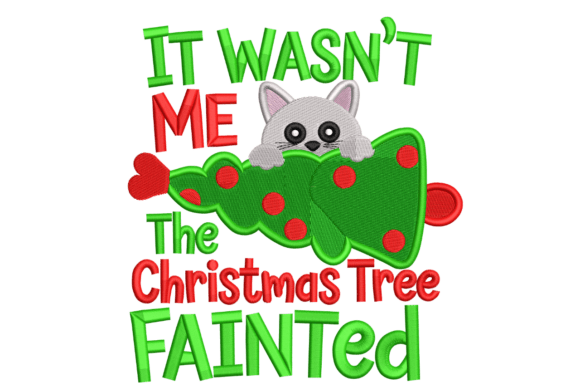
The immediate appeal of Cat Christmas Tree Fainted lies in its narrative. It captures that specific, chaotic energy of pets during the holidays that resonates deeply with customers. However, as a professional, my first assessment is always structural. The layout is compact yet expressive, avoiding the sprawling dimensions that often cause registration issues on stretchy fabrics. The digitizing appears to prioritize clean outlines over excessive fill complexity, which is a major positive for production speed.
Visually, the design balances whimsy with clarity. The fainted cat motif serves as a strong focal point without requiring microscopic detail that might get lost on textured fabrics. For an Etsy seller or boutique owner, this visual readability is crucial. Customers scrolling through thumbnails need to understand the joke instantly, and the bold shapes in this embroidery file facilitate that quick recognition. It feels less like a generic clip-art trace and more like a purposeful embroidery project intended for fabric application.
Real-World Application: The Holiday Sweatshirt Test
To truly evaluate this design, I simulated a real client scenario: creating a batch of unisex fleece sweatshirts for a small business holiday pop-up. Fleece is notoriously tricky due to its pile and stretch, making it the perfect stress test. In this context, Cat Christmas Tree Fainted performed admirably. The center placement on the chest allowed the design to sit flat without distorting the garment's drape.
During the stitch-out, the transition between the tree elements and the cat figure was smooth. There were no unnecessary jumps that would require excessive trimming, which is a massive time-saver for commercial embroidery workflows. The personality of the design translated perfectly to the finished garment. It didn't look stiff or overly formal; it looked like a fun, wearable conversation starter. For those creating custom apparel, this balance of technical ease and character is exactly what drives repeat sales. The design holds its own against the texture of the fleece, ensuring the humor isn't swallowed by the fabric nap.
Versatility Across Products and Fabrics
Beyond apparel, I assessed how this design adapts to other popular holiday items. Its proportions make it an excellent candidate for a tote bag design. Canvas totes provide a stable, non-stretch base that allows the stitches to shine with maximum definition. Here, the design can be scaled up slightly to serve as the primary graphic, perhaps paired with a simple text line below.
I also considered its use in baby embroidery and nursery decor. While the "fainted" theme is humorous for adults, the soft shapes work well for children's items too, provided you adjust the thread colors to softer pastels or traditional holiday tones. However, caution is needed here. If stitching for infants, ensure the back of the embroidery is covered or lined to prevent skin irritation, as even well-digitized designs have bobbin thread texture.
For home decor, such as tea towels or pillow covers, the design acts as a charming accent rather than an overwhelming centerpiece. It pairs beautifully with gingham or plaid backgrounds, enhancing the farmhouse or cottage-core aesthetic that dominates holiday craft markets. As a digital embroidery file, it offers enough versatility to justify its place in a maker's library across multiple product categories.
Technical Considerations and Fabric Warnings
No design is universal, and Cat Christmas Tree Fainted requires mindful application. While it is described as easy to stitch, the user must respect fabric physics. On high-pile fabrics like terry cloth or plush minky, the fine details of the cat’s expression may sink in. In these cases, using a water-soluble topping is non-negotiable to keep the stitches visible and crisp.
Be wary of using this on extremely sheer or lightweight fabrics without adequate support. The stitch density, while optimized, still carries weight. Without proper stabilizer, you risk puckering or fabric distortion around the edges of the design. I recommend a medium-weight cutaway for knits and a tear-away for woven cottons. Always verify your hoop size before starting; cramping a design into the smallest possible hoop increases tension issues. Give the design breathing room within the hoop to maintain fabric stability.
Additionally, consider the contrast. This design relies on shape recognition. Stitching dark thread on dark fabric will render the "fainted" detail invisible. High contrast is key for visual impact. If you plan to offer this on black sweatshirts, ensure your digitizing includes light-colored outline accents or modify the thread colors to include white or cream highlights to define the silhouette.
Professional Notes for Makers and Sellers
Before listing any finished product featuring Cat Christmas Tree Fainted, run a physical test. Digital previews and printable mockups are useful for marketing, but they cannot predict how threads interact with specific fabric grains. Check the licensing terms included with your purchase to confirm whether you can sell physical items or if the file is restricted to personal use. Respecting intellectual property protects your craft business reputation.
- Test Stitch Density: Run a sample on scrap fabric identical to your final product to check for puckering or gaps.
- Verify Thread Contrast: Ensure the design reads clearly on both light and dark backgrounds before mass production.
- Check Stabilizer Pairing: Match your backing to the fabric weight; do not rely on one stabilizer for all projects.
- Inspect Small Details: Zoom in during the stitch-out to ensure facial expressions and paws remain distinct.
- Confirm Licensing: Double-check usage rights for commercial sales versus personal gifting.
- Mockup Accuracy: Use photos of actual stitch-outs for listings whenever possible to build customer trust.
Elevating Your Holiday Collection
Cat Christmas Tree Fainted succeeds because it understands the assignment: it is festive, funny, and technically sound. For the creative entrepreneur, it represents a low-risk, high-reward asset that bridges the gap between niche pet lover gifts and general holiday cheer. Whether you are embellishing a personalized gift for a friend or stocking your shop with unique holiday embroidery, this design delivers professional results when treated with proper technique.
Ultimately, the value of any design assets lies in how confidently you can execute them. By understanding the interplay between this specific artwork and your materials, you transform a digital file into a tangible, sellable commodity. Take the time to test, stabilize correctly, and choose your color palettes intentionally. When executed well, this design doesn't just decorate a product; it adds a layer of relatable personality that turns casual browsers into loyal customers.